







Search Results for: New World coffee beans
Front Street Brazil Cerrado Rainforest Alliance Golden Bean New World Coffee Bean Review: Roasting, Grinding, and Pour-Over Experience
Front Street Brazil Cerrado Rainforest Alliance Golden Bean New World coffee bean is a specialty coffee from the Cerrado region of Brazil. This article documents the roasting recommendations for this bean, the dry aroma performance after grinding, and the complete process of hand-brewing with a tiamo single-cup drip filter. The overall taste is balanced and mellow, clean and comfortable, with a gentle entry but a long-lasting finish, and excellent body and richness. If you prefer the balanced style of Front Street Jamaica Blue Mountain No. 1, this Rainforest Alliance Golden Bean New World is worth a try. [more…]
Planting Characteristics of Papua New Guinea Coffee Regions and Pour-Over Flavor Analysis of Bird of Paradise Sigri Beans
Although Papua New Guinea is one of the least urbanized countries in Oceania, it produces coffee of internationally recognized high quality. Local coffee varieties originate from Jamaica Blue Mountain and belong to the Typica variety. They are mostly grown in highlands at altitudes of 1,300 to 1,800 meters. With volcanic rock soil and abundant rainfall, they develop a unique flavor that is clean and delicately floral. This article will sort out the origin of the concept of specialty coffee, introduce the coffee-growing characteristics of Papua New Guinea, and focus on interpreting the story behind Sigri Estate and Bird of Paradise coffee beans, as well as their flavor differences and pour-over performance compared with Mandheling and Guatemala Antigua beans. [more…]
KOUANDJI Estate, New Caledonia, South Pacific: The Rare Legend of Bourbon Pointu Leroy Coffee Beans
In the Melanesian archipelago of the South Pacific, New Caledonia is like a vibrant oasis, hiding one of the world's rarest, most expensive, and most unusual coffees. KOUANDJI Estate is located at the foot of the mountains about 25 kilometers southeast of the capital, Nouméa, and is dedicated to reviving the region's nearly vanished coffee-growing industry. The estate cultivates "Leroy," also known as Bourbon Pointu, named for the pointed ends of its fruit. Its caffeine content is only half that of ordinary Arabica, and its yield is extremely low—even the French presidential palace must purchase it in limited quantities. Front Street Coffee has always paid attention to such niche, rare bean varieties. This article will take you deeper into the story behind its historical origins, variety characteristics, and unique flavor. [more…]
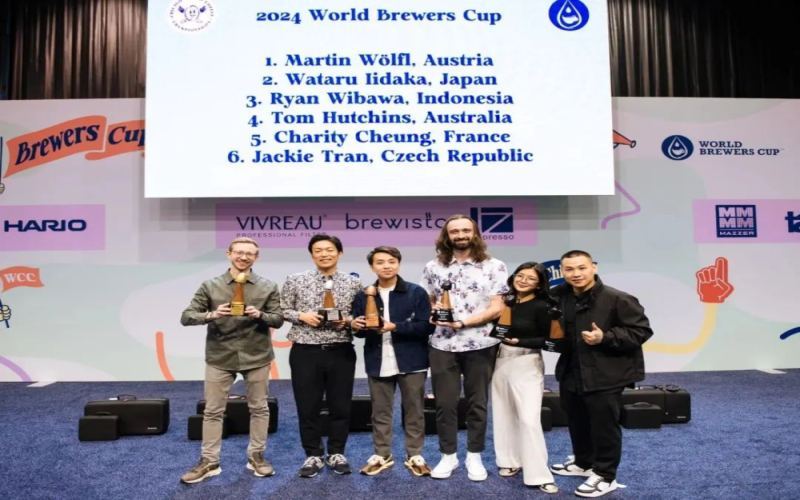
The Rise of Blended Beans: New Trends at the 2024 World Brewers Cup and an Analysis of the Champion's Brewing Approach
The 2024 World Brewers Cup (WBrC) and World Cup Tasters Championship concluded in Chicago, USA, with Austrian competitor Martin Wolf taking the crown. One of the biggest highlights of this year's event was that four of the six finalists independently chose blended coffee beans, ranging from two-bean blends to three-bean blends, and from cross-origin mixes to combinations of different processing methods, showing an unprecedented diversity in blending strategies. This article reviews the competition results, analyzes the competitors' blending approaches, and explores why blended beans have become a new trend in specialty coffee competitions. [more…]

Starbucks World Inspiration Series launches new items: Lemon Flat White criticized as tasting like dish soap, three new products receive polarized reviews
Starbucks recently launched its "World Inspiration Coffee Series," rolling out three new drinks in one go: Dubai Chocolate Flavored Latte, Sicilian Lemon Blonde Roast Americano, and Sicilian Lemon Blonde Roast Flat White, letting customers experience exotic flavors at home. As soon as the news broke, brand fans rushed to order on the launch day to try them, and shared their honest impressions on social media. The three drinks received noticeably divided reviews: the Dubai Chocolate Latte was praised as tasting like a pistachio latte, the Sicilian Lemon Americano stirred old fans' memories of the 2019 Sour Lemon Cold Brew, while the Lemon Flat White, due to its combination of lemon concentrate, blonde roast espresso, and oat milk, was described by many tasters as tasting like "lemon dish soap," sparking heated discussion. Some advised others to skip it, while others, driven by curiosity and reverse psychology, insisted on giving it a try. So is this niche combination a flop or a hidden gem? This article walks you through real consumer feedback. [more…]

Exploring Papua New Guinea's Specialty Coffee Regions: The Flavor and Story of Bird of Paradise Typica
In the Asian coffee landscape, Papua New Guinea is a rising star. This island nation, which shares the island of New Guinea with Indonesia, has joined the ranks of the world's specialty coffees thanks to its high-quality washed Arabica beans. Its coffee is known for medium body, bright acidity, and floral and fruity notes, with a style closer to the fresh, bright character of Central America than the rich bitterness of Mandheling. Bird of Paradise coffee beans—Typica variety—carry the unique terroir of their origin, and Front Street Coffee recommends this excellent bean worth savoring. This article will take you through the coffee history, variety characteristics, and flavor description of Papua New Guinea, exploring the coffee legend nurtured by this pristine land. [more…]
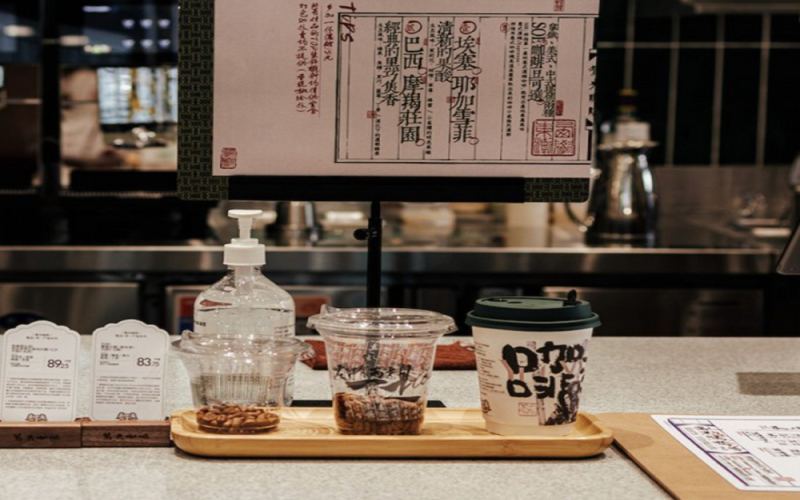
From Guochao Design to Local Flavors: How Chinese-Style Coffee Is Forging Its Own Path
In recent years, cafés featuring elements of traditional Chinese culture have been springing up one after another, and coffee, this imported product, is accelerating its path toward Sinicization. From new-style tea beverage brands跨界 opening coffee shops, to domestic local brands driving down prices to cultivate the market, to industry practitioners proposing that Chinese-style coffee should have its own mode of expression, this path is full of both opportunities and challenges. This article sorts out the evolution of coffee in China from the instant coffee era to the specialty coffee wave, and explores the current state and future of new Chinese-style coffee—innovation can attract the masses, but only professionalism, the cultivation of local bean varieties, and deep cultivation of the Yunnan production region can truly make Chinese-style coffee remembered by the world. At the end of the article, Front Street Coffee's communication channels are attached. [more…]
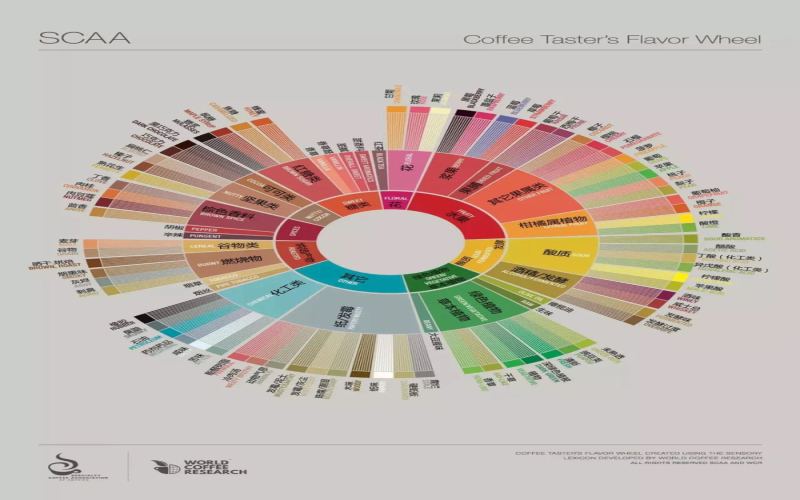
Comprehensive Comparison of the Old and New SCAA Coffee Flavor Wheels: Structure Analysis, Sensory Classification, and a Guide to Obtaining HD Wallpapers
The coffee flavor wheel can be considered one of the most valuable tools in the coffee field, and the SCAA has undertaken its first major update since its creation 21 years ago. This revision relied on deep collaboration between the World Coffee Research organization and the SCAA, bringing together the collective wisdom of sensory experts, researchers, coffee buyers, and roasters, becoming the largest and most participatory flavor wheel research project to date, and giving rise to a series of new terms in the industry and professional field. This article will guide you from the structure of the old flavor wheel, gradually analyzing the details of the changes in the new version, including the addition of a large number of fruit and plant flavor descriptors such as strawberry, blueberry, jasmine, and grapefruit, helping you fully understand this common language of the coffee world. [more…]
A Detailed Guide to the World's Top Ten Coffee Brands: From Geisha to Kilimanjaro—Origins, Flavors, and Processing Methods
There are numerous coffee varieties worldwide, and differences in origin, variety, and processing method give each bean its own unique flavor expression. Washed processing brings bright acidity and a clean mouthfeel, natural processing presents tropical fruit and fermented aromas, and honey processing offers a balanced sweet-and-tart profile reminiscent of wine and dried fruit. This article takes the world's three major producing regions as its framework and, one by one, sorts through ten representative coffees—Panama Geisha, Jamaica Blue Mountain, Indonesia Mandheling, Ethiopia Yirgacheffe, Kenya K72, Costa Rica honey-processed, Brazil Yellow Bourbon, Guatemala, Papua New Guinea, and Tanzania Kilimanjaro—combining Front Street Coffee's bean selection and brewing suggestions to provide coffee enthusiasts with a flavor reference that balances professionalism and practicality. [more…]
Flavor Analysis of the World's Three Major Coffee Regions: Asian Coffee Origins and a Detailed Guide to Processing Methods for Indonesian and Yunnan Beans
The world's coffee-growing belt is usually divided into three major regions: Latin America, Africa, and Asia. Front Street Coffee has previously introduced you to Africa's bright acidity and Latin America's balanced chocolate notes. This article focuses on the Asian producing regions, examining one by one the coffee characteristics of Indonesia, Yunnan in China, Vietnam, India, and Papua New Guinea. Asian beans as a whole are known for their rich, sweet body. Indonesia's wet-hulling and aged processing, Yunnan's Catimor and Typica small-bean varieties, India's monsoon malabar process, and Papua New Guinea's "Little Blue Mountain" Typica are all typical examples worth savoring in detail. The article also includes brewing parameters and flavor descriptions for several of Front Street's representative Asian beans, for the reference of coffee enthusiasts. [more…]
Why is Papua New Guinea coffee called Little Blue Mountain? Flavor differences from Jamaican Blue Mountain and an analysis of Bird of Paradise Estate
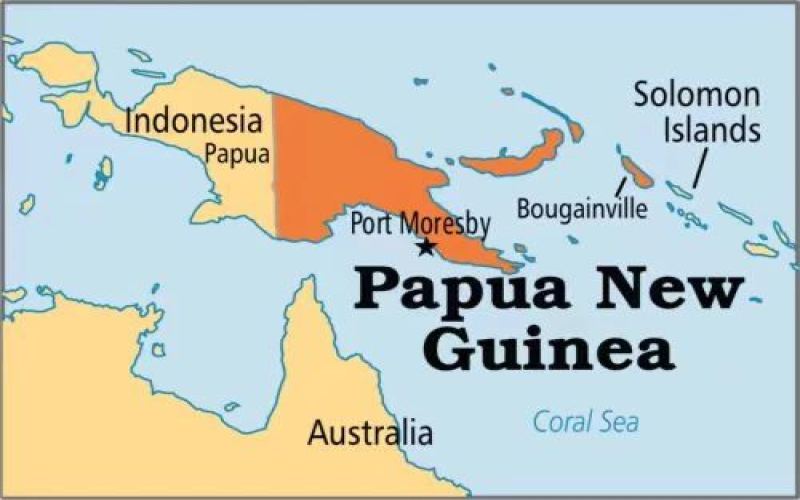
Papua New Guinea coffee is often called "Little Blue Mountain" by enthusiasts, a description rooted in both historical origins and similarities in terroir. This article begins with the Papua New Guinea coffee offered by Front Street Coffee, tracing the country's coffee introduction and cultivation history, industry fluctuations, and the reasons behind inconsistent quality, while providing a detailed analysis of Front Street's Papua New Guinea · Bird of Paradise Estate—including origin information, variety characteristics, washed processing methods, roasting recommendations, and brewing parameters—to help you understand its similarities to and differences from Jamaican Blue Mountain. [more…]
Papua New Guinea Bird of Paradise Coffee Beans: The Flavor Code from Jamaican Blue Mountain Introduction to Sigri Estate
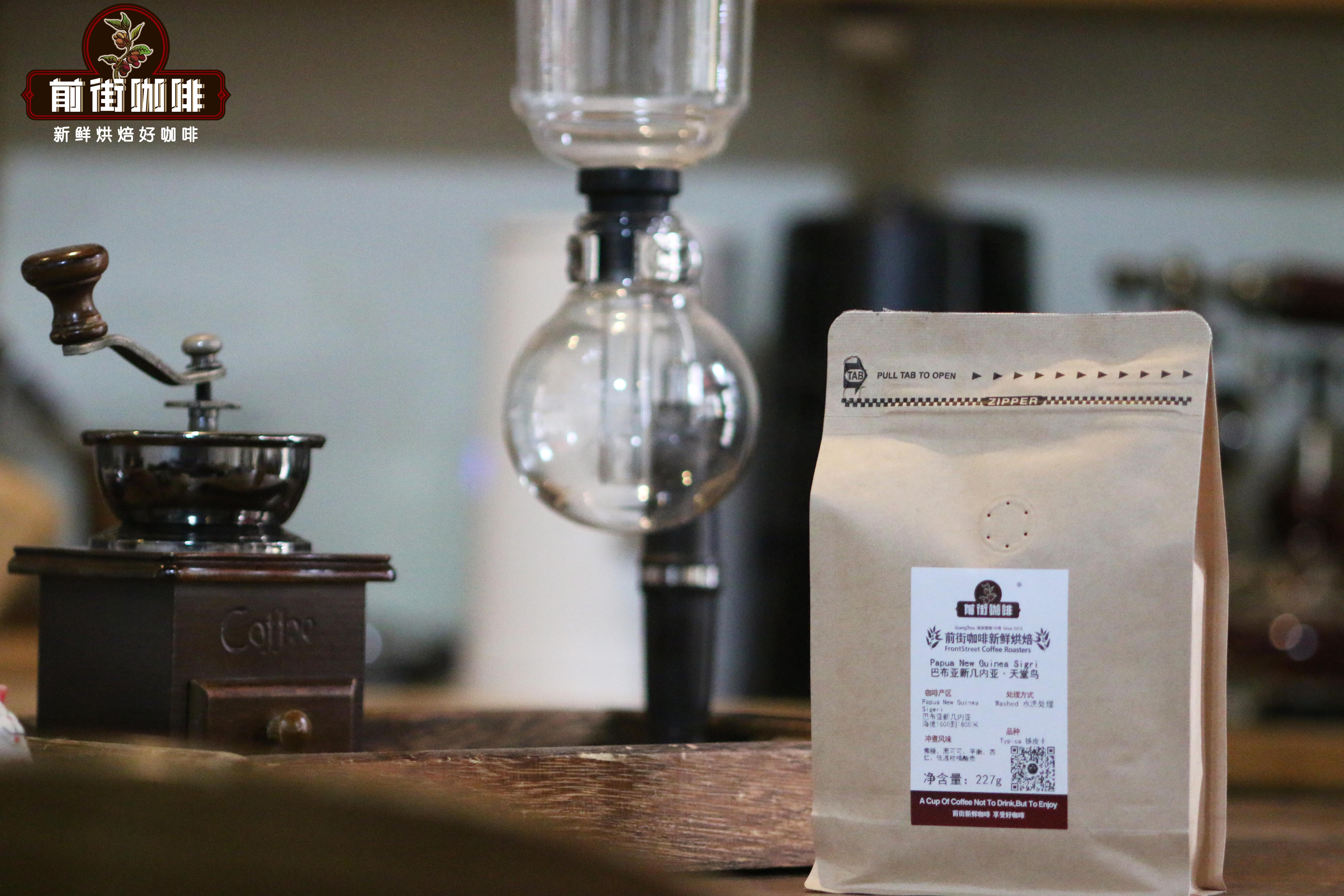
Papua New Guinea is both a familiar and unfamiliar origin for coffee lovers. Many people have heard of Front Street Papua New Guinea coffee, yet few have actually tasted it. Those who have often compare it to the flavor of "Front Street Blue Mountain Coffee Beans," which is why it has earned the nickname "Little Blue Mountain." To investigate the origin of this name, Front Street specifically acquired and listed this coffee. This article will provide a comprehensive interpretation of the unique charm of Papua New Guinea Bird of Paradise coffee beans, covering its cultivation history, industry challenges, estate background, varietal characteristics, processing methods, and Front Street's roasting and brewing recommendations. [more…]
Papua New Guinea Bird of Paradise Estate Coffee Beans: Where Does the "Little Blue Mountain" Flavor of the Typica Variety Come From?
Papua New Guinea coffee is often dubbed "Little Blue Mountain," but few people have truly tasted it. For this reason, Front Street Coffee has specially introduced Front Street Papua New Guinea Bird of Paradise Estate coffee beans, sorting through everything from the region's terroir and cultivation history to variety characteristics. Bird of Paradise Estate is located in the Waghi Valley of the Western Highlands Province, at an altitude of about 1,500 meters, and is known for its Typica variety and washed processing. Its cup profile presents nutty notes, cocoa, gentle fruit acidity, and a caramel finish. This article will guide you through why coffee from this island nation combines richness with fruit acidity, as well as Front Street's roasting and brewing recommendations. [more…]
The 2024 Cup of Excellence Returns to Ethiopia: A New Chapter in Coffee Competitions in the Birthplace of Arabica
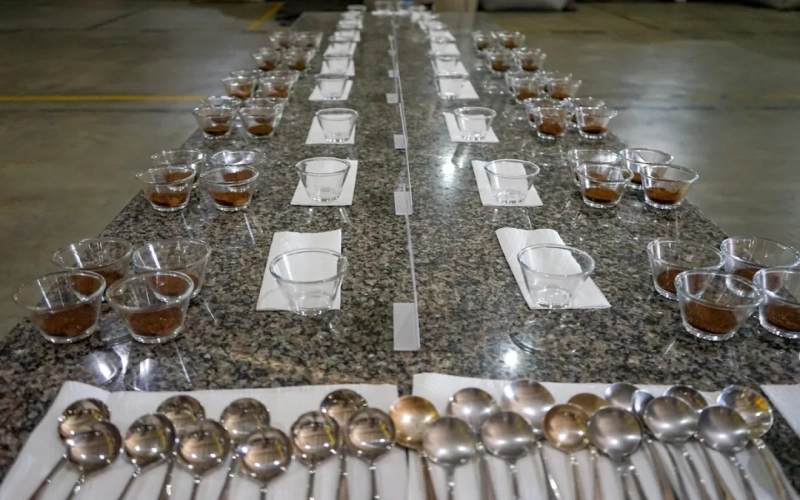
The Cup of Excellence (COE), as the world's first internet auction platform for award-winning coffee, has been a highly anticipated event in the coffee world since it was founded in Brazil in 1999 by the Alliance for Coffee Excellence. Ethiopia, the birthplace of Arabica coffee, hosted the COE for the first time in 2020 and set a record high of $400.5 per pound in 2022. However, due to the termination of partner funding and the civil war, the 2023 event was forced to be suspended. This year, as the situation has stabilized, the COE has officially returned to Ethiopia, with more than 600 samples arriving at regional warehouses and, for the first time, separate natural and washed categories. The European Commission is selecting international judges, and the industry is looking forward to the emergence of a new batch of high-quality coffee beans. Front Street Coffee will also continue to follow this grand event and bring the latest information to enthusiasts. [more…]

Luckin Coffee officially announces EDG as its recommendation officer, as the championship team returns with hit beverages.
Luckin Coffee announced via its official Weibo that it will reveal a new "seed-planting officer" on April 25, with a poster hinting that this mysterious figure comes from a world-champion esports team. Although the company tried hard to maintain the suspense, sharp-eyed netizens had already recognized the silhouette of the EDG team from the cutout traces, and Luckin played along with this tacit mutual understanding. This signing not only means that EDG becomes Luckin's new seed-planting officer, but also signals the return of a once-viral beverage riding on the momentum, with discussion heat on social platforms continuing to climb. EDG's comeback championship at the League of Legends World Championship forms an interesting parallel with Luckin's trajectory of striving to bounce back after scandal—both have achieved breakthroughs in their respective fields that make people sit up and take notice. [more…]
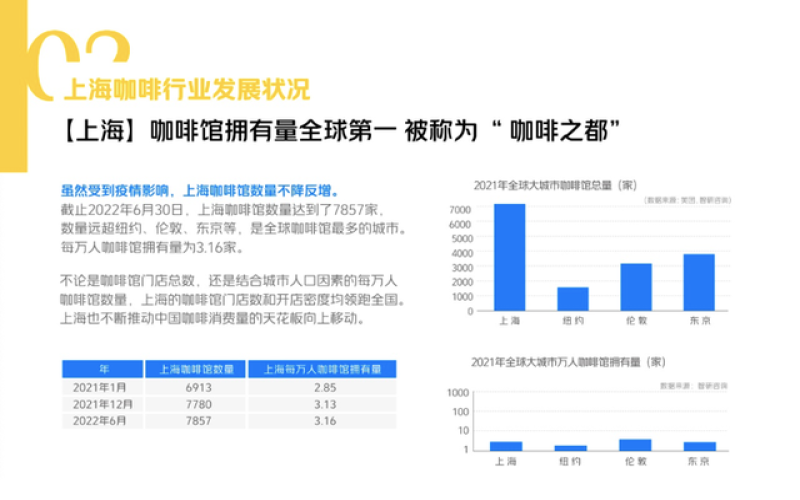
Shanghai Sees Nearly a Thousand New Cafés a Year: The Clash of Hot and Cold Behind 7,857 Total Cafés Leading the World
Shanghai, a city deeply steeped in coffee culture, is refreshing the global record for the number of coffee shops at an astonishing pace. As of June 2022, the city had 7,857 coffee shops, not only firmly ranking first in China in terms of quantity, but also surpassing international metropolises such as New York, London, and Tokyo to become the city with the most coffee shops in the world. Yet behind this numerical growth lie both the rapid expansion of specialty coffee brands fueled by capital and the reality of small shops struggling to survive under the impact of the pandemic. From 867 new additions in 2021, to a slowdown in the pace of openings in the first half of 2022, and then to the industry regaining momentum in the second half, what kind of resilience and challenges has Shanghai's coffee market shown? This article will combine the latest data and industry cases to analyze the driving forces and hidden concerns behind the counter-trend growth of Shanghai's coffee industry. [more…]
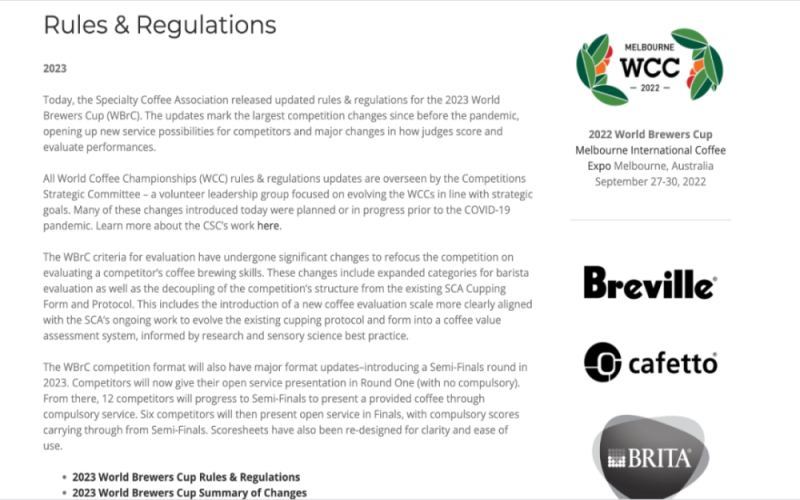
In 2023, the WBC rules underwent a major adjustment: plant-based milk and other animal milks are permitted for use in the Barista Championship.
The Specialty Coffee Association announced on December 22 the new rules for the 2023 World Barista Championship (WBC), World Brewers Cup (WBrC), World Cup Tasters Championship, and Cezve/Ibrik Championship. Among them, the most notable change in the WBC is allowing competitors to use plant-based milk or other animal milks to make milk coffee, breaking the long-standing restriction of using only cow's milk. The WBrC adjusted its evaluation criteria, refocusing on competitors' brewing skills and introducing a new coffee evaluation scale and a semifinal format. This series of changes has sparked widespread discussion in the industry, with some supporting the increased inclusivity and others worried about scoring fairness. This article will outline the specific contents of each rule update and the reactions from all parties. [more…]

Starbucks founder Schultz bids farewell to CEO role, Narasimhan takes over in October to embark on a new journey
Starbucks' legendary founder Howard Schultz recently made it clear that he will completely step away from the CEO role, will not return, and fully supports the new leader, Laxman Narasimhan. Narasimhan will officially take office on October 1, and he candidly described the process as a "structured immersion" that gave him a valuable learning opportunity. Schultz, meanwhile, will remain on the board and serve as a long-term advisor, helping to safeguard Starbucks' future. At the same time, Starbucks is facing multiple challenges, including rising global costs, a sharp decline in same-store sales in China, and intense competition from local brands. How the new chief will lead the world's largest coffee chain in responding to these changes is worth watching. [more…]
A Roundup of the World's Top Ten Classic Coffee Bean Origins: Regional Flavors, Processing Methods, and Front Street's Curated Recommendations
The brilliance of the coffee world is often hidden in the flavor differences brought about by different origins and processing methods. Some people prefer the bright acidity and clean mouthfeel of washed beans, some love the full tropical fruit notes of natural beans, and others cannot forget the sweet, balanced character of honey-processed beans. Faced with a dazzling array of choices, knowing where to begin is often difficult. This article systematically sorts through ten of the most representative coffee-producing countries and varieties among the world's three major producing regions, covering Panama Geisha, Jamaica Blue Mountain, Indonesia Mandheling, Ethiopia Yirgacheffe, Kenya K72, Costa Rica honey process, Brazil Yellow Bourbon, Guatemala, Papua New Guinea, and Ethiopia Gesha Village, analyzing their flavor characteristics and processing methods one by one, and attaching Front Street Coffee's corresponding recommended bean selections and brewing performance, providing coffee lovers with a bean-selection guide that is both informative and practical. [more…]
A Complete Flavor Analysis of the Asia-Pacific Coffee Producing Regions: Indonesian Mandheling, Yunnan Small-Bean, and Papua New Guinea Bird of Paradise
Among the world's three major coffee-growing belts, the Asia-Pacific region stands out with its rich, mellow mouthfeel. Compared with the bright fruity acidity of Africa and the chocolate-nutty notes of Latin America, Asian coffee is known for its heavy sweetness and is often used as a base bean in espresso blends. This article will examine the coffee characteristics of major producing countries one by one, including Indonesia, Yunnan in China, Vietnam, India, and Papua New Guinea, covering varieties, processing methods, and brewing suggestions. Among them, products such as Front Street Coffee Indonesia Sumatra Mandheling, Front Street Coffee Yunnan Baoshan small-bean, and Front Street Coffee Papua New Guinea Bird of Paradise are all typical examples for understanding Asian coffee styles. Whether you are a pour-over enthusiast or an espresso player, the flavor logic of these regions is worth exploring in depth. [more…]